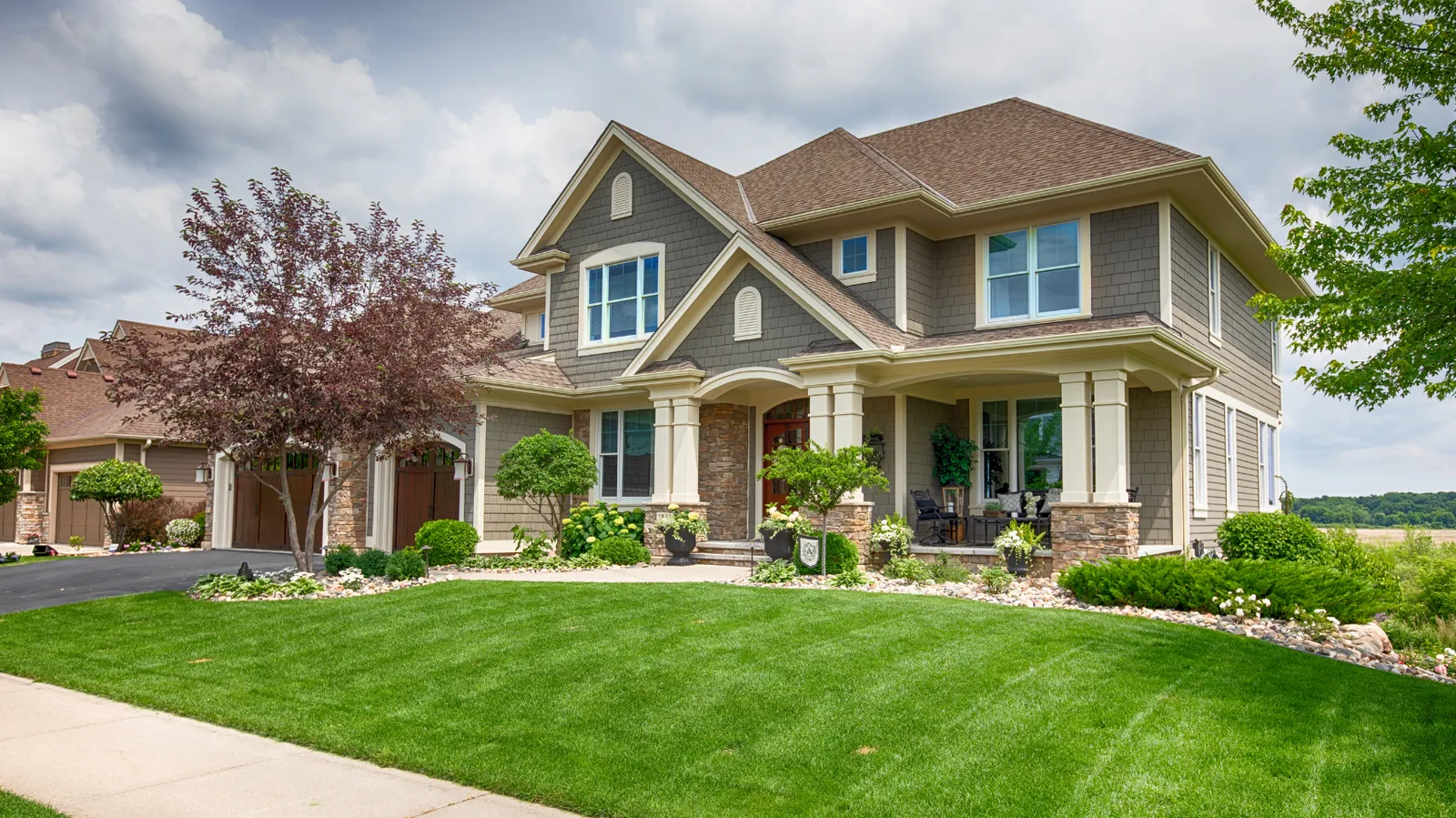
Roof Shingle Options in Skiatook, OK
The shingle styles and colors on offer around Skiatook, and the toughness grade that sits underneath them.
How a shingle looks and how it handles hail are two different things. You risk nothing by asking.
Roof shingle options in Skiatook, OK
You're making two decisions when you pick from the shingle options here, and most people notice one. The first is how the roof looks from the road, which is what a sample board sells. The second is how it takes hail, and in Osage County that's a spring question. Paying more only helps if it buys the second answer.
Architectural and designer are style grades. They sort shingles by thickness and by how the roof looks from the street, and most asphalt roofs going back on today are one or the other. The impact rating is a separate label that sits on either grade, and that's where it gets confusing. It matters most on a roof that's already been through a hail season.
The two grades, set against each other
Architectural and designer sit side by side here on the things you can see from the yard, and toughness is graded separately from all of it.
| What differs | Architectural | Designer |
|---|---|---|
| What it is | Asphalt laminate, built up in layers so the surface reads as depth instead of flat. | The same laminate carried further, cut and stacked to imitate slate or cedar shake. |
| From the road | Even and dimensional, the look on most streets around town. | Deeper and more irregular, closer to a slate roof than to asphalt. |
| Hail rating | Made in impact-rated versions and in plain ones. | Also made impact-rated, because the rating grades toughness and not looks. |
| Where it fits | Most houses, and the grade a roof usually goes back on with. | Houses where the roof is part of what people see first. |
Both grades are asphalt and both are sold impact-rated. Looks are the axis this table sorts on.
What a rating is measured on, and what it is not
Impact ratings come out of a laboratory, and it's worth knowing what happens in there before you pay for one.
What the test does
A lab drops a steel ball onto the shingle from a fixed height, and the shingle passes if the mat underneath doesn't split. Class 4 sits at the top of that scale, earned against a 2 inch ball from about 20 feet.
What the test does not do
A class is a test result and not a warranty, and hail damage commonly sits outside that warranty language. Osage County's own record, kept by NOAA and NCEI, tops out at a 3.5 inch stone near Burbank, and that's well past what the lab drops.
What the rating can be worth
Carriers in hail states often discount the premium on an impact-rated roof, though how much moves by company and by state, so no single figure fits every policy. On a roof that's already been through a claim, the discount and the tougher mat are usually the argument for paying up.
How a spent shingle gives itself away
A roof at the end of its life gives small signals for a season or two before a ceiling ever shows it. Read them together rather than one at a time, because any single one has an innocent explanation.
Look at the lines across the slope
New courses run straight all the way across a slope, and an old field doesn't hold that line as the mats shrink at different rates. From the street the roof reads wavy where it used to read ruled.
Watch what the wind takes
Brittle shingles break loose in gusts that wouldn't have moved them when they were new, because the seal strip bonding each course has given up. Two or three off the same slope in one year points at the whole field, not at those shingles.
Start at the valleys and the ridge
Water concentrates in the valleys and wind works hardest along the ridge, so those two lines wear out first. When the shingles there are thin, the rest of the field isn't far behind.
Take a light into the attic
Daylight showing through the deck, or dark staining along the boards, says water's been getting past the shingles for a while. If the attic is dry, you've still got time to choose instead of react.
Check the ceilings after a slow rain
A spent field lets water through in long quiet rain before it ever does in a storm, and the first mark is a faint ring in a corner well away from any pipe. By the time it shows downstairs the deck above has been wet for weeks.
Ask when the roof went on
A roof that came with the house is often older than the paperwork suggests, because past repairs rarely show up in the sale file. If nobody can name the year, it's safe to treat the shingles as older than they look.
Shingle grade questions asked up here
The questions that come up once both grades are on the table.
See both grades on your own roof
A sample board settles the color and it doesn't settle anything else. Send Osage Trail Roofing the age of the roof and what the slopes look like from the yard, and our roofer weighs both grades against your own pitch and exposure before either one goes on the house.
A closer look at the roof first.