
Hail Damage Roof Repair in Skiatook, OK
Whether Skiatook hail left marks or left damage decides whether you need a repair, and the soft metal around your house answers first.
Hail came through and the roof still looks fine from the yard. Every strike gets counted and priced on paper.
Hail damage roof repair in Skiatook, OK
You watched the hail come down, and from the ground you can't tell whether it marked your roof or broke it. That's the question to put to Osage Trail Roofing.
A stone can finish a shingle while the surface above it still lies flat and sheds water for another season. That's why the word after hail is functional or cosmetic, and why a roof that still looks fine can need work anyway.
We're on the side of the smaller true answer here, up to and including the one where your roof turns out fine. You'll hear the recommendation and the reasoning under it before anyone talks about a figure.
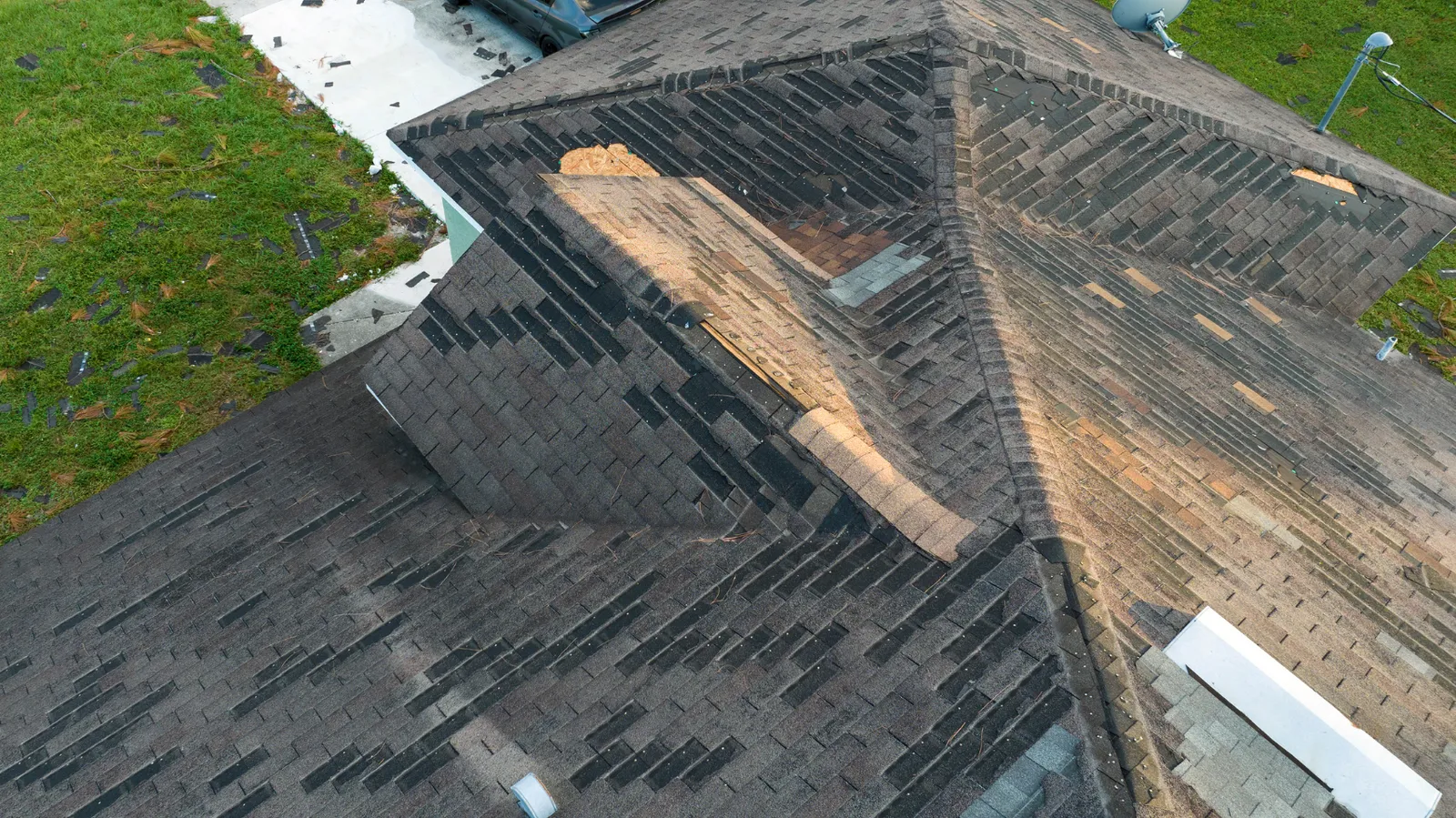
Soft metal checked first
Gutters, downspouts, vent hoods and the chase cover come before the ladder does. Metal keeps a strike where shingles hide one, so it's what tells you the stone size.
Test squares chalked
A square is chalked on each slope and every strike inside it is counted. It's how a roof is judged on a claim, so the findings speak the claim's own language.
Functional or cosmetic
Every mark inside the squares is called a fracture that shortens the shingle or a scuff that doesn't. Insurers hinge on that line, and it's worth being right before anything is filed.
Photographed as found
Every mark that counts is photographed where it sits, with the soft metal shots kept beside the slope shots. You keep that record, and it's dated to the day.
Edges and seals lifted
The perimeter courses and hips are lifted by hand to see whether the bond still holds. Hail nights bring wind, and a tab that's let go is a different repair.
Itemized either way
The findings come back with a figure against each line, whether that's a few shingles or the whole covering.
What hail marks before it marks shingles
Hail signs its work on the softest surface it lands on, and around a Skiatook house that's almost never the roof itself. You can check every one of these from the ground. Each gives you a clue about the stone size that came down and the direction it arrived from, which is where a real inspection starts.
The chimney chase cover
That flat metal cap on top of the chase sits horizontal and thin, so it takes hail square on and keeps every dent. It's often the clearest record on the whole house of how big the stones were.
Garage door panels
The lower panels are steel and face the street, so a storm arriving at an angle stipples them from one side only. If the door took it, the slope facing that same direction took it as well.
Spatter on the mailbox
Hail knocks the dull oxidized layer off painted and galvanized metal and leaves bright freckles behind. Those marks weather away within weeks, so finding them means the hit was recent and isn't left over from an older storm.
The drip edge at the eave
Run your eye along the metal lip at the bottom edge of the roof where it laps into the gutter. Dents there mean stones reached the roof plane at an angle that also worked the first courses of shingle above it.
A patio cover or carport
Metal over a patio records hail as shallow dishes you can feel with a flat hand even when the light hides them. It's lower and more sheltered than the roof, so anything it caught, the roof caught worse.
The car left outside
Hood and roof panels on a vehicle parked in the open are the same soft metal as everything above it. If the car came away dented, there's no question the stones were big enough.
Marked squares, slope by slope
Here's the order a hail check runs in, and it all happens on one visit instead of across a series of them.
The soft metal
Our roofer works the perimeter first, taking in the gutters, downspouts, vent hoods and anything metal standing in the yard before a ladder goes up.
A square per slope
A test area is chalked off on each slope, so strikes are counted inside a fixed boundary and aren't estimated across the whole plane.
Damage or scuff
Every mark inside those squares is called as a fracture that shortens the shingle or as cosmetic, and a photograph goes with each call.
Findings and figure
You come away with every call priced out line by line, nothing charged for the visit, and it's your move from there.
The deductible decides your figure
On a hail claim your deductible is the figure that comes out of your pocket, and the roof price is a different number. What the work costs decides whether the damage is worth claiming at all, since repairs landing under your deductible are money you're spending either way. So the first useful figure is a price set against the damage found. What roofing costs here covers the wider ranges.
Nothing here is a quote, and there's no figure for your house until someone has counted the damage on it.

Hail questions from Skiatook owners
What Skiatook owners ask after a hail night, roughly in the order they ask it.
Have Skiatook hail damage checked
You'll know whether the roof is marked or broken, settled on the slopes instead of from the yard. Every strike counted inside a chalked square. A figure written against what was found, and the decision after that is yours.
A closer look at the roof first.