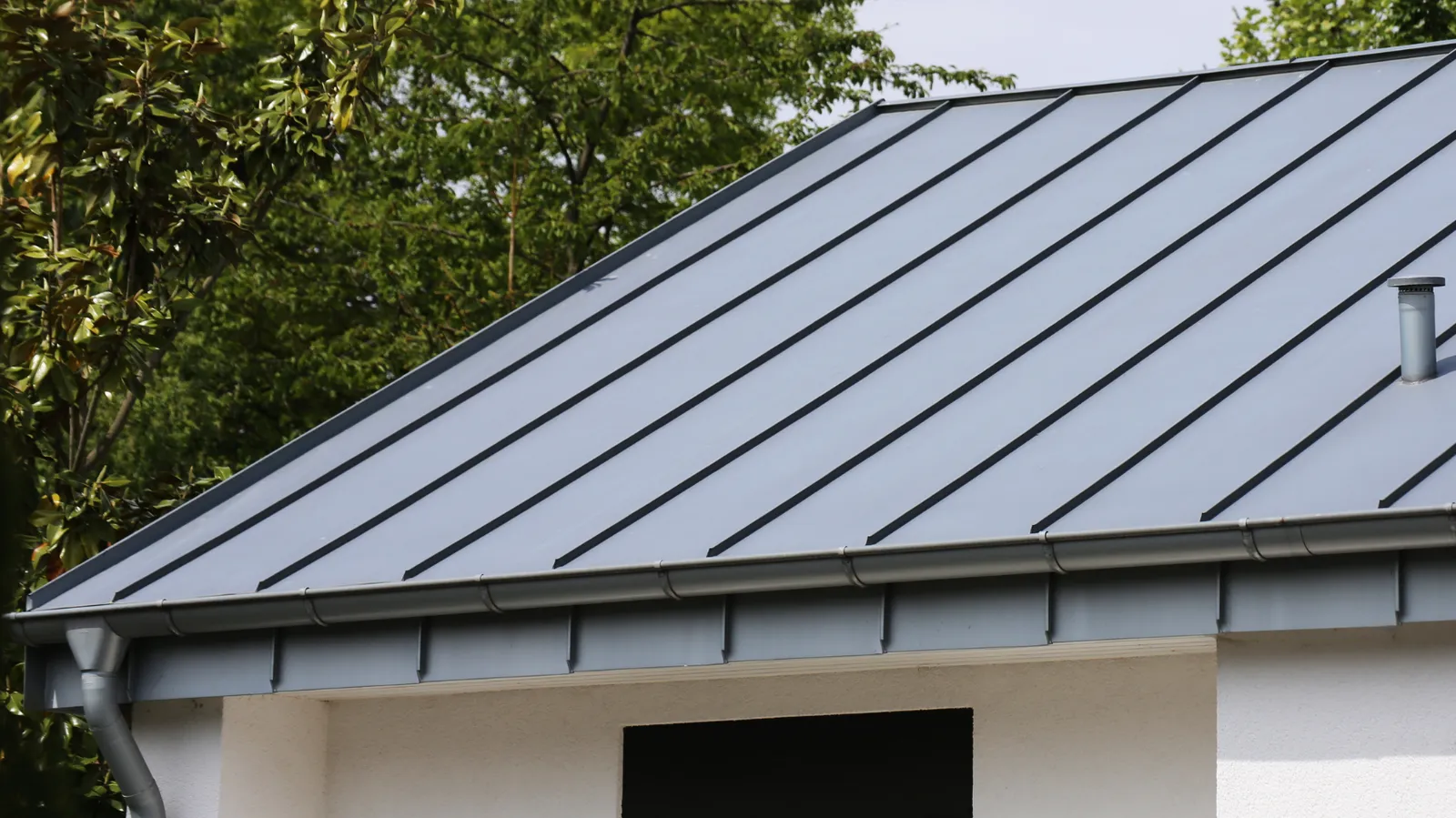
Metal Roofing in Skiatook, OK
What metal roofing asks of a Skiatook house against another round of shingle, and when it is the wrong answer.
The second hail deductible on the same roof is usually when metal comes up. Asking for a number commits nothing.
Metal roofing in Skiatook, OK
Metal comes up after a second hail deductible lands on the same roof.
Before anyone quotes a panel, your roofer says whether metal is right for your house. On plenty of roofs here, it isn't.
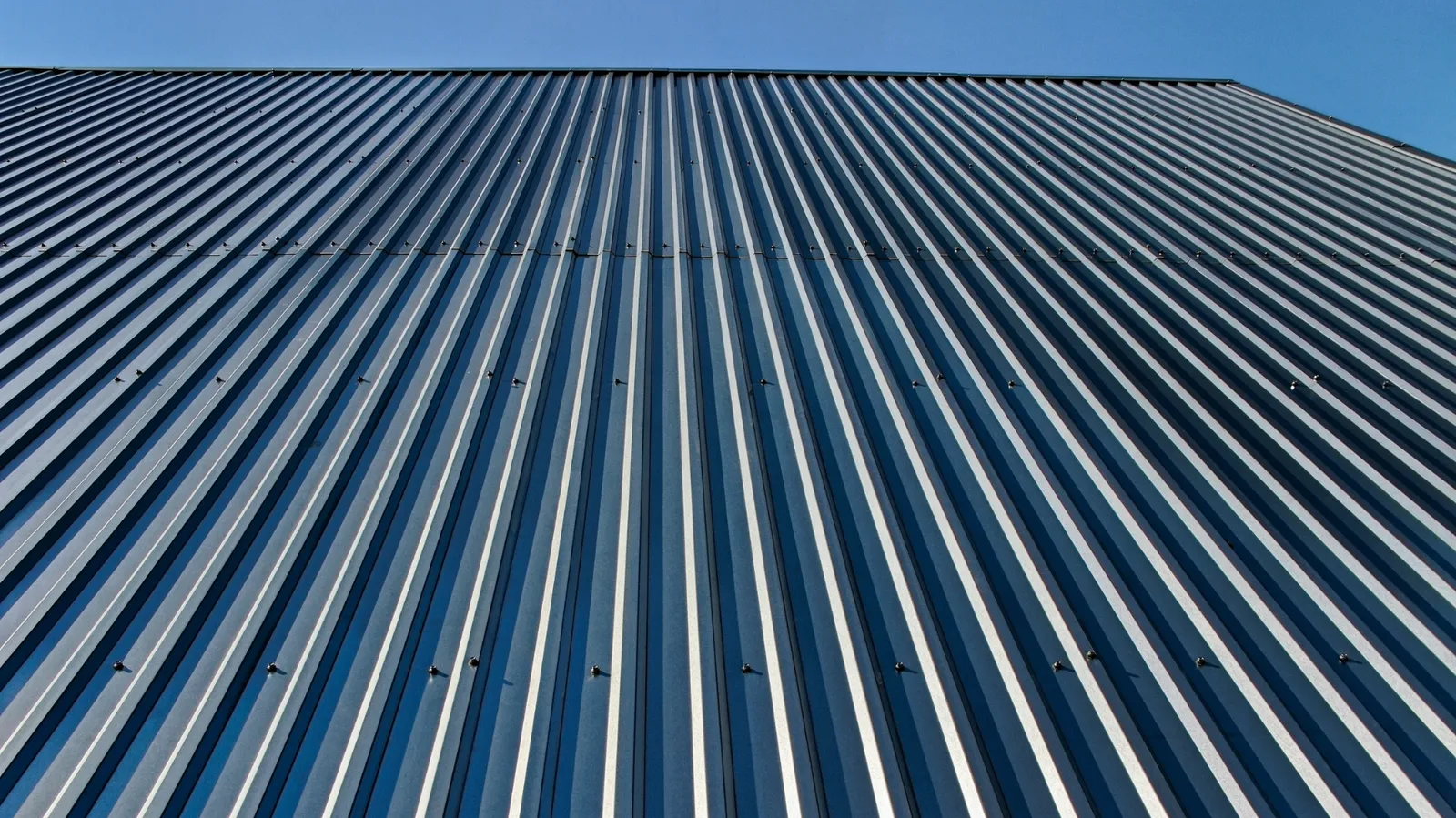
So when is it yes? Usually on a house that keeps claiming, with long unbroken slopes and no move planned. Standing seam hides its fasteners under raised seams. Exposed-fastener panels screw through the face, and those washers give out first.
Two pieces of paper come with a metal roof. The panel and its finish belong to the manufacturer, and our roofers stand behind the installation and put their workmanship terms in writing. A chalking finish and a leaking seam don't have the same owner.
Both coverings, one visit
Your roofer prices metal and shingle on the same slopes, itemized the same way. Neither quote costs you anything, and the difference is yours to weigh.
Panel type matched to the slopes
Standing seam and exposed-fastener are different products at different prices. Your pitch and the run of each slope decide which one belongs up there.
Clips that let metal move
What fails first up there usually isn't the panel. Clips let metal grow and shrink with the heat, and a system pinned tight works its own fasteners loose.
High-temperature underlayment
What goes under panels isn't what goes under shingle, because a metal roof holds far more heat against it. Use the shingle product here and it shows itself by the second summer.
Decking read bare
Where the old roof comes off, the boards get looked at bare. Long panels telegraph a soft deck straight through, so anything found down there is priced before it's covered up.
Flashing and trim fabricated to fit
Every valley, wall, chimney and pipe gets metal bent to your roof's own angles. That hand work is where a cut-up roof adds cost, so it's itemized.
Where a metal roof starts making sense in Skiatook
Metal costs more up front than the shingle most houses around here carry, and it doesn't suit every house in town. A place sitting open toward Skiatook Lake takes wind with a longer run at it than one inside the tighter downtown grid, and our roofers know those two exposures differently because they work both of them.
Count what hail has already cost you
Two claims on one address changes the math. The deductible isn't a one-off any more, it's a cost that keeps coming back, and metal is bought against the next hail as much as the last.
Trace your roof lines from the driveway
Panels do their cheapest and cleanest work where a slope runs long and unbroken down to the eave. Every dormer, valley and chimney has to be cut and bent around by hand, so a busy roof shape moves a metal quote much further than it moves a shingle one.
Decide how long you are staying
You only get that extra spend back if you're still under the roof to collect it. A house heading for sale in a few years rarely returns the difference at closing.
Find the low-pitch add-on
A back porch or addition framed with almost no fall keeps defeating shingle, because shingle can't move water without slope. Panel systems tolerate that shallow pitch, which is why a metal section sometimes lands on a house that stays shingle everywhere else.
Check what life is left up there
A roof with one claim behind it and sound years ahead is the case where metal is the wrong purchase. Impact-rated shingle meets the same hail for a much smaller gap, and it doesn't care how cut up the roof already is.
Separate the look from the reason
If the draw is mainly how the roof looks from the street, a heavier shingle profile gets most of the way there for a good deal less. That's worth settling before anyone measures for panels.
What goes under the panels, and why
Most of a metal job happens before the first panel is carried up a ladder. It's a longer install than a shingle replacement on the same house, so the order matters more here than it does on a straight tear-off.
Off or over
Your roofer settles whether the old covering comes off to the deck or panels can lawfully go over it, and looks at the boards bare wherever the roof's opened.
Panel and fasteners
Standing seam or exposed-fastener, the gauge, the finish and the clip spacing all land on the quote, so they're settled long before the morning of the job.
High-heat underlayment
A high-temperature underlayment goes down first, because the product that sits happily under shingle isn't rated for the heat a metal roof holds against it.
Panels, trim, closures
Panels go up on clips that let the metal expand and contract, with flashing, trim and closures fabricated to the roof's own angles as the work moves across it.
Metal against shingle over the years
There's no number for your house until your slopes get measured: long clean runs price closest to their material, while dormers and a steep pitch add hand work. The national comparison is a fair one. The 2025 Cost vs. Value Report puts a metal replacement at $51,865 against $31,871 for midrange asphalt, both priced as the same job, a full tear-off with new underlayment. Metal costs more up front and gives back the smaller share of it at resale. Those are national figures on one defined job and neither one is a Skiatook price. What a roof costs here covers the rest.
A measured quote on your own slopes is the only figure worth acting on.
Metal questions from Osage County
The five that come up most once metal is genuinely on the table.
Compare both on the Skiatook roof
Two answers settle this: what your roof has already been through, and how many more winters you'll be under it. Our roofers price metal and shingle on your own slopes, so what you're comparing is your house against itself instead of a brochure average.
A closer look at the roof first.