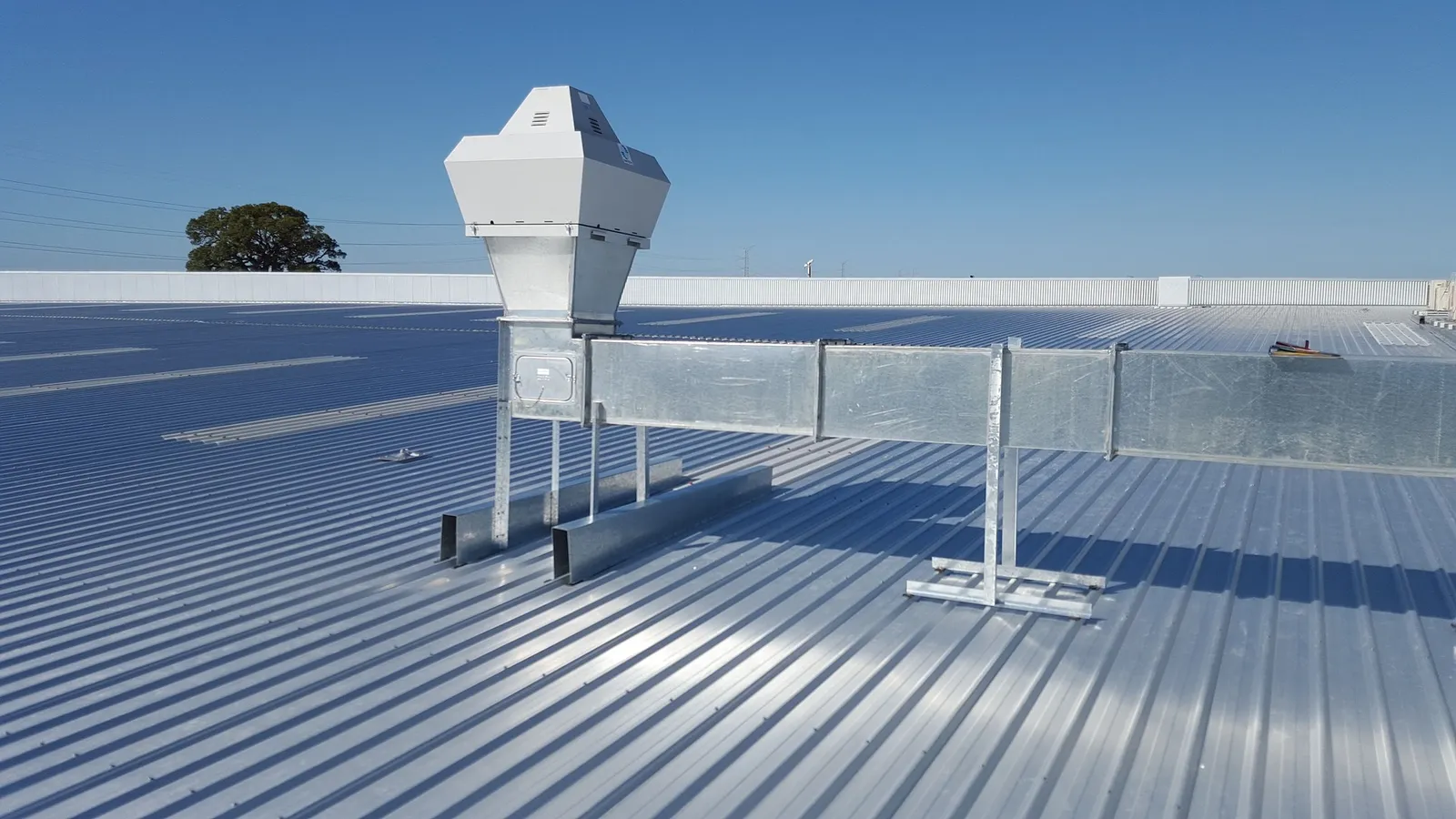
Commercial Roofing in Skiatook, OK
Membrane, coating and low-slope work on Skiatook business buildings, from naming the system on the deck to the estimate that prices it.
Commercial roofs fail at the seams and curbs first. You see every line of the repair before anything is booked.
Commercial roofing in Skiatook, OK
How much of this roof has to come off, and how much of the building stops?
Our roofers name what is on the deck first, because coatings, sheet membranes and gravel-surfaced systems cost differently to work on. Not much of the building stops: the roof comes off in sections.
Standing water left another season works under the seam into the insulation, and every hail day in the Osage County storm record is another chance at a puncture.
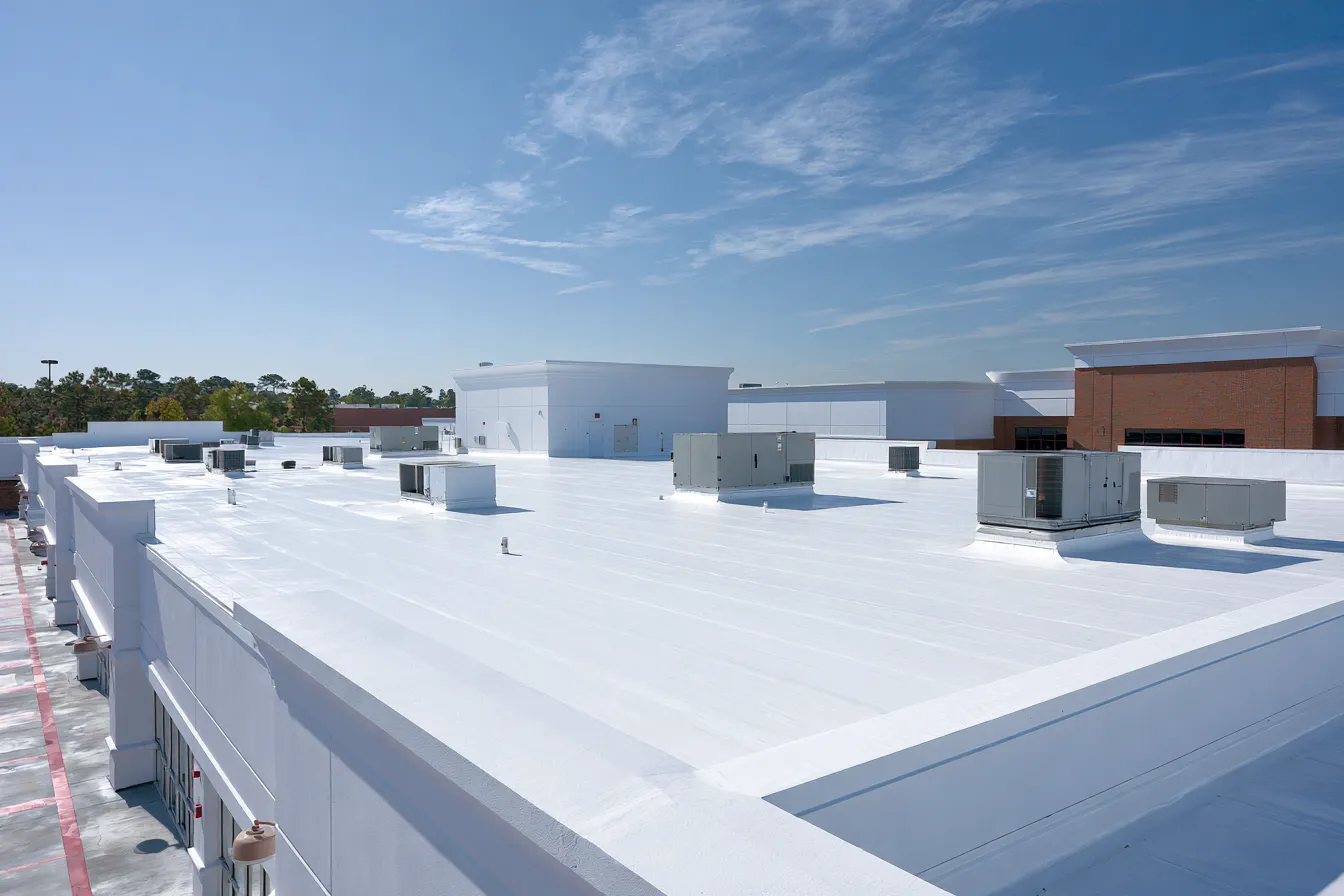
What a commercial scope has to cover
An estimate on a low-slope roof is only useful when it's itemized, because flat roof repair work is mostly curbs, drains and edge metal.
A commercial repair total is assembled one piece at a time. That count is what makes two bids comparable, and what holds up when a line has to be defended to an adjuster.
The manufacturer covers the membrane as a product, and your roofer's own terms cover the seams and terminations. What each one covers is worth reading before a curb leaks.
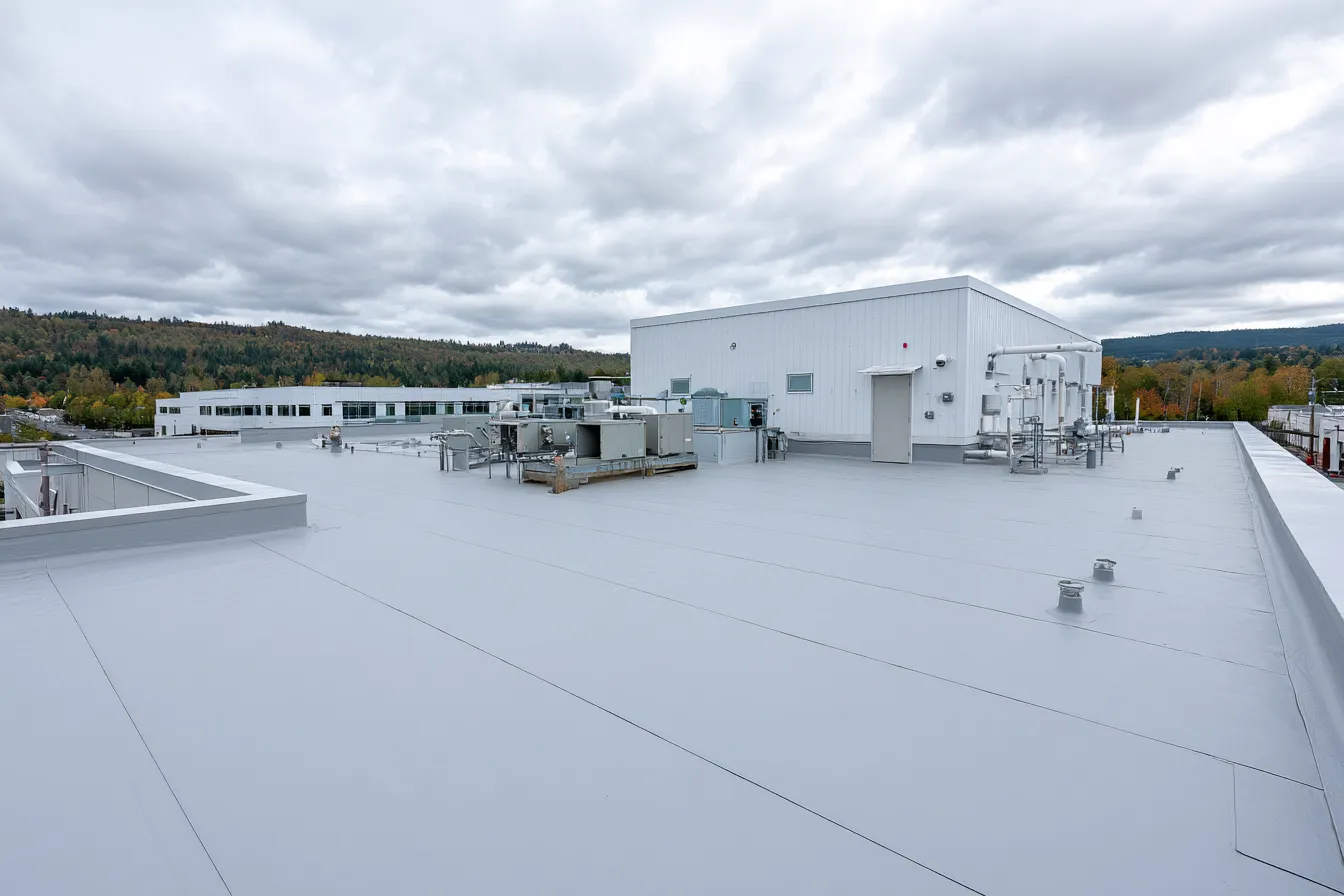
Rooftop units and curbs
Every HVAC unit, exhaust fan and equipment curb is priced on its own line. A curb reflashed twice already is a different job from one needing a new collar.
Drains, scuppers, overflows
Each drain and overflow is pulled, cleared and checked for a working seal at the bowl. Water standing around a blocked drain is what turns a sound membrane into a wet one.
Perimeter edge metal
Coping and termination bar are inspected the full run of every edge, because wind lifts a low-slope roof from its perimeter inward. Loose edge metal is its own line item.
Deck and insulation condition
Test cuts show whether the boards are dry and whether the insulation still has any R-value left. This is the finding that decides between a repair and a tear-off.
Tie-ins to pitched sections
Where a low-slope roof meets a shingled or metal section, that transition is its own assembly. Two systems have to agree there, and it's where water shows up inside first.
Interior protection
Covering for stock, fixtures and the floor below the work area appears as a priced line of its own. Tear-off over an occupied space moves dust down through the deck joints.
Membranes and coatings compared plainly
Four coverings turn up on the low-slope roofs around town, and what separates them is how they are built and how they are repaired.
| System | How it is built | Where it gives out | Repairing it |
|---|---|---|---|
| TPO single-ply | A thin white sheet, fastened or glued down, with hot-air welded seams. | At the welds and the curb flashings, long before the sheet itself wears out. | Clean the sheet and weld a patch over the spot; a hole can be cut out and re-welded. |
| EPDM rubber | A black rubber sheet in large pieces, with taped or glued seams. | At the seam tape, and where the sheet turns up a wall or parapet. | Strip the seam back and re-tape it; the open field takes a patch well. |
| Built-up, gravel surfaced | Layers of felt and bitumen mopped together under gravel or a cap sheet. | Blisters, splits, and low spots where the gravel has washed away. | Move the gravel, then cut, dry and rebuild the plies underneath. |
| Silicone or acrylic coating | A liquid membrane rolled or sprayed over a roof still sound underneath. | Thin spots, pinholes at curbs, and anywhere it stayed damp underneath. | Dry out what wetted it, then clean the area and recoat. |
The covering has to be identified before a repair on it can be priced, which is why naming the system comes first.
Working around a building still in use
A commercial roof is worked in sections so the floor below stays open, and the stretch it takes is measured in weather windows rather than days. Along Highway 20, the real commercial spine through downtown Skiatook, that also means staging material where deliveries and parking are not shut off.
Name the covering
The system on the deck is named first, because a welded seam, a taped lap and a gravel surface are three different repairs.
Units and access
Every curb, drain and rooftop unit is located and photographed, along with the route material can take to the roof without crossing a tenant's door.
Section by section
The roof is divided so one area is open at a time and only the space beneath it has to be cleared or worked around.
Details last
Terminations, curb flashings and edge metal are finished behind each phase, and the punch list is walked with you before the job is signed off.
Questions from the people who own it
The questions that come up when the roof belongs to a building somebody else works in.
Get the Skiatook building looked over
The deck, the drains and the flashing around every rooftop unit each get a line of their own. The paper that comes back is a document an owner or a board can read end to end and decide from, with no square-foot number standing in for the detail. Smaller buildings and single leaks run the same way, alongside the rest of what our roofers handle.
A closer look at the roof first.