
Gutter Installation in Skiatook, OK
Seamless gutter installation sized to the roof above it, hung on wood that will hold it, and proven to drain toward the outlets.
Water spills over the gutter lip instead of running to the spout. Show our roofers where, and they price it.
Gutter installation in Skiatook, OK
Water pouring over the front of a gutter doesn't always mean something's broken. Often the run is just smaller than the roof feeding it. You'll hear which one it is on your house before anybody prices it.
Coverage splits in two. The metal carries the manufacturer's finish warranty, and the hangers, pitch and sealed corners are our roofer's workmanship, with both sets of terms in the estimate.
What a new run hangs on matters more than the run. Wood that's been soaking behind a leaking gutter won't hold hangers, so a roofer checks the fascia bare first.
Most whole-house work is one visit. The runs are formed on site, so the only joints are the corners and the outlets.
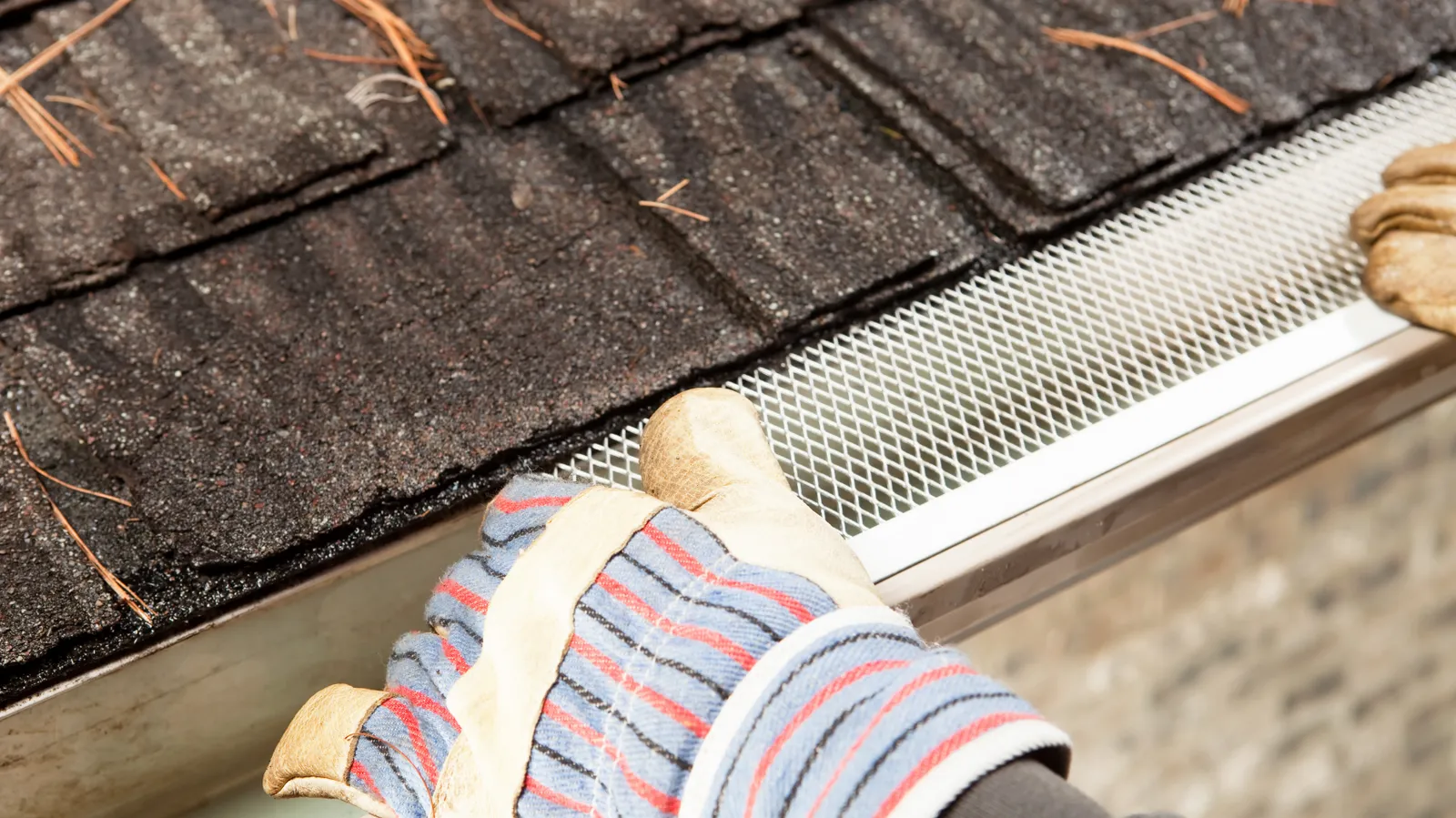
Runs sized to the roof above
The area and pitch of every slope feeding a run set how wide the trough has to be. Five-inch suits most houses; long or steep slopes often want six.
Outlets counted, not assumed
An outlet is what empties the trough, so a wide run with only one small outlet still backs up at the far corner. The longer the run, the more of them it takes.
Fall proven with a level
A run is hung to drop toward each outlet, and a level proves it instead of an eye. Water sitting in the trough days later means the drop isn't there.
Fascia read before anything hangs
Whatever the new run fastens to gets reported to you first, since hangers pull straight out of soft wood. A board that needs replacing is priced on its own line.
Corners and end caps sealed
Corners and outlets are the only joints on a formed run, and each is sealed by hand. Sealant wears out before the metal does, so that's where to look first.
Guards quoted on their own
Screens and mesh are priced separately, so the gutter figure stands by itself. They buy fewer trips up a ladder, and nothing sold will keep a trough clear forever.
Signs the runs stopped doing their job
A good share of the housing around Skiatook went up before 1960, and those older eaves are usually where a gutter line gives itself away first. Our roofers work both, the older streets and the newer builds, and the same symptom doesn't mean the same thing on each.
A waterfall over the front edge
Water coming over the lip mid-rain means the trough's taking on more than it can move, which is a capacity problem or an outlet problem. Clearing it out buys you one storm if the run is simply undersized.
Gray stripes down the outside face
Those vertical streaks are grime dragged over the edge by water that's been wicking where it shouldn't. They look like dirt, and they're really a record of overflow.
A gutter line that dips between hangers
A run that sags has usually lost its grip on the board behind it, and once it dips, water pools at the low point and adds weight. That board's where the fix normally starts.
Standing water days after rain
A trough still holding water once the sky's cleared has either lost its fall or has a blocked outlet. Either way, that weight's working on the hangers the whole time it sits there.
A trench in the bed below
Where the drip line has cut a channel through mulch or soil, the roof's been unloading in one spot for a long time. That water's going somewhere, and where it ends up matters more at the foundation than in the flowerbed.
Paint peeling on the board behind
Bubbled or flaking paint along the fascia usually means water's been getting behind the gutter for a while. That's worth settling before a new run goes up on that wood.
Size, hang, then prove the fall
The measuring decides what a gutter can carry; the hanging decides whether it ever gets the chance. Our roofers take these in order on a Skiatook house, and most of what matters is settled before there's a single length of metal on the ground.
Size to the slope
Every slope feeding the run is measured for area and pitch, because that's what decides the width of the trough.
Hang it on solid wood
The run is formed on site to the length of each fascia and hung on brackets set into board that'll hold them.
Prove the fall
Water's run through the finished line so the drop toward each outlet is proven on the spot instead of assumed.
Tie in the downspouts
The downspouts are dropped and extended so the water leaves well clear of the foundation instead of soaking the ground beside it.
Why two gutter quotes come out apart
What pulls two gutter quotes apart is almost always how each roofer sized the runs and counted the outlets, so that's the first thing to compare when you line two of them up. The roof area and the pitch above the run decide the size. The corners, the downspout locations and whatever the fascia behind the old run has been doing decide the labor, and that second half is where quotes separate. A house with cut-up rooflines carries more of all of it than a simple ranch does, and that accounts for most of the distance between two numbers on the same street.
No figure is worth printing for a whole house until the fascia runs are measured and the corners counted. Ask each quote to show you its footage and its outlet count, and the two of them become comparable.

Gutter questions raised around Skiatook
The questions that come up once somebody has stood outside in the rain and watched it happen.
Get the Skiatook runs measured
A gutter quote is only as good as the measuring behind it, so the slopes above the run and the wood behind it both have to be looked at first. Our roofer does that on your house and hands back the scope and the figure written out line by line, at no charge.
A closer look at the roof first.